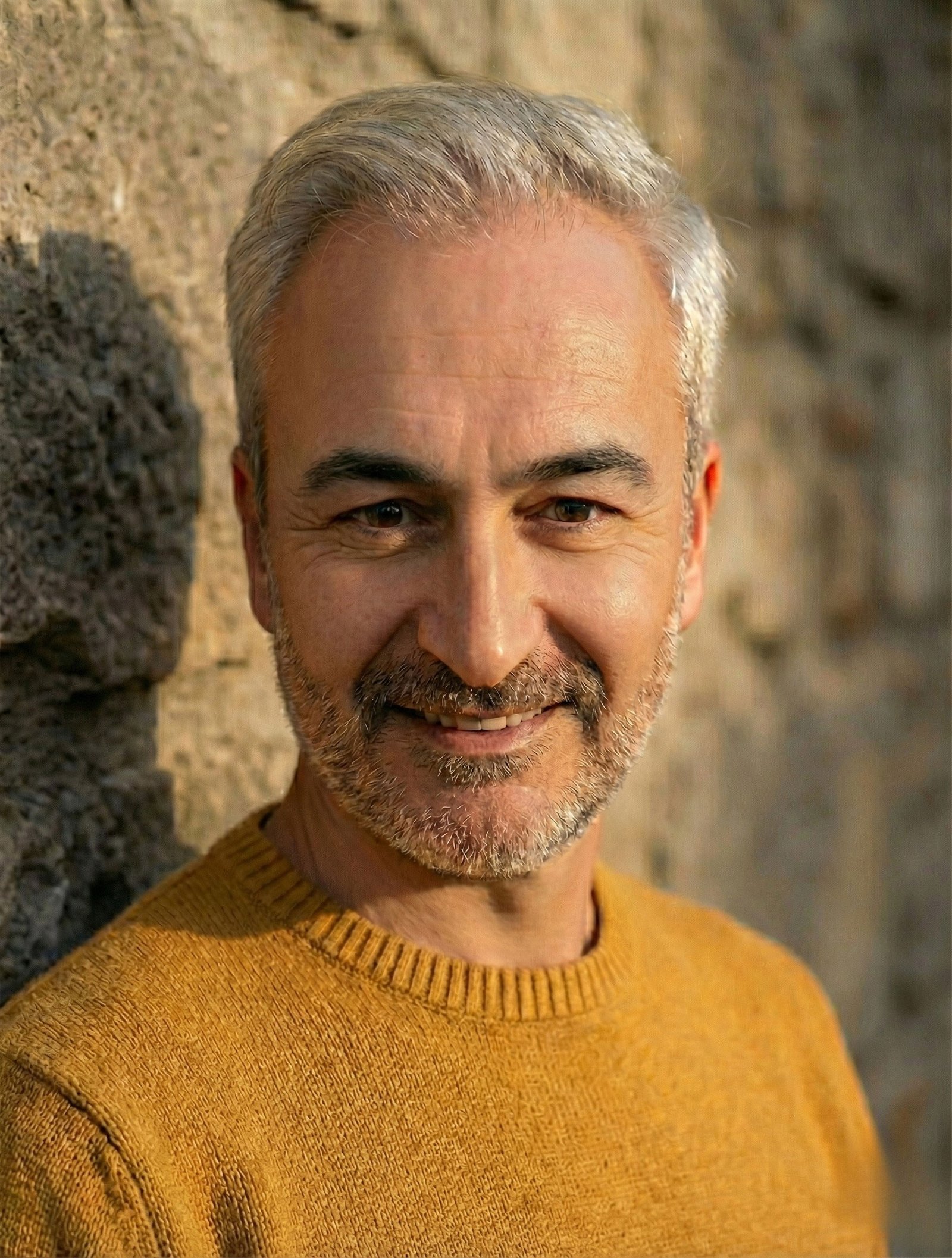
Vincent Leleux
In 2023, I had a stroke at 57. What followed was not a recovery in the conventional sense — it was a forced, granular education in what nervous system regulation actually requires when the system has been structurally compromised.
I spent two years rebuilding autonomic function from partial capacity. I learned, from the inside, what vagal tone means when it is absent. What HRV looks like when the system cannot self-regulate. What it takes — specifically and measurably — to move a nervous system from dorsal vagal shutdown back toward ventral vagal function.
That process is the foundation of this protocol. Not wellness theory. Not coaching methodology. Applied neuroscience derived from clinical necessity.
How the protocol was built — and why it works
The protocol is not derived from a single modality. It draws on three convergent bodies of clinical research, combined with direct post-stroke recovery experience.
Polyvagal Theory
Stephen Porges' polyvagal theory provides the foundational map of autonomic nervous system states — ventral vagal, sympathetic, dorsal vagal — and the conditions required to move between them. The protocol uses this map as its primary diagnostic framework.
HRV Research
Peer-reviewed HRV literature establishes the measurable relationship between vagal tone and autonomic resilience. HRV is used as the primary objective outcome marker across the protocol — not as a goal in itself, but as a proxy for autonomic state.
Somatic Regulation
Targeted somatic interventions engage the body's regulatory systems directly — respiratory patterning, vagal activation sequences, and co-regulation techniques. These are applied in real-time during sessions, adjusted based on the client's current autonomic state.
What this protocol addresses
- Chronic autonomic dysregulation from occupational stress
- Dorsal vagal shutdown — exhaustion, detachment, cognitive fog
- Sympathetic hyperactivation — anxiety, insomnia, hypervigilance
- Impaired HRV and reduced autonomic flexibility
- Post-burnout nervous system recovery
What this protocol does not address
- Diagnosed psychiatric conditions requiring clinical treatment
- Acute medical emergencies
- Replacement for ongoing medical or psychiatric care
- Conditions requiring pharmaceutical management
What a stroke teaches you about nervous system regulation
In 2023, at 57, I had a stroke. The immediate aftermath was not primarily about physical rehabilitation — it was about relearning how a nervous system that has lost significant regulatory capacity finds its way back.
I experienced dorsal vagal shutdown directly. I experienced sympathetic dysregulation. I experienced the specific cognitive impairment that comes from a prefrontal cortex that cannot access sufficient vagal support.
None of what I learned came from a course or certification. It came from necessity — from needing to understand, at a granular level, what was happening in my own nervous system and what specific interventions were producing measurable change.
The protocol I now use with clients is a direct translation of that recovery process — adapted for the autonomic patterns of occupational burnout, which share more structural similarity with post-stroke dysregulation than most practitioners recognize.
"The women I work with are not broken. Their nervous systems are doing exactly what nervous systems do under sustained threat: conserving resources, reducing exposure, shutting down non-essential functions. The clinical question is not what is wrong with them. It is what the system needs to feel safe enough to regulate."
— Vincent LeleuxWhat to expect — and what not to
The session structure is consistent. The protocol is not.
Every session begins with assessment
Before any intervention, I establish your current autonomic baseline — respiratory pattern, somatic indicators, self-report. This is not a formality. It determines what happens in the next 50 minutes. The same client on different days may require entirely different approaches.
The protocol adapts in real time
There is no fixed script. I work with what your nervous system is presenting in the moment — not with a predetermined sequence. This requires more clinical attention than a structured protocol, but produces more consistent outcomes.
Outcomes are tracked, not assumed
Every client begins with a baseline assessment. Changes in HRV proxies, sleep quality, stress response latency, and executive function are tracked across sessions. If measurable change is not occurring by session 4, the approach is modified.
This is not therapy
I do not work with narrative, history, or psychological content unless it surfaces as a somatic pattern relevant to autonomic state. I am not a therapist. I am not a coach. The work is physiological — targeted, measured, and documented.
Ready to establish your baseline?
The intake assessment is 30 minutes and complimentary. It gives you a measurable picture of your current autonomic state — regardless of whether you continue.
Check If You QualifyQuestions about working with Vincent
Where are you based?
I am based in France. All sessions are delivered remotely via Google Meet. I work primarily with clients in the USA, operating on EST time zone hours — Monday to Friday, 8am to 6pm EST.
What are your qualifications?
My primary qualification is clinical experience — two years of direct nervous system recovery work post-stroke, combined with extensive study of polyvagal theory, HRV research, and somatic regulation. I do not hold a conventional medical or therapeutic license. This work operates outside the regulated health sector.
How many clients do you work with?
I work with a limited number of clients at any one time to maintain session quality and availability. Current capacity allows for 8–10 active clients. If intake slots are full, you will be notified of availability.
Do you work with men?
Yes. The protocol addresses autonomic nervous system dysregulation — a physiological process that operates identically regardless of gender. The site targets professional women because burnout in that demographic is significantly underserved, but the protocol itself is equally applicable to men.